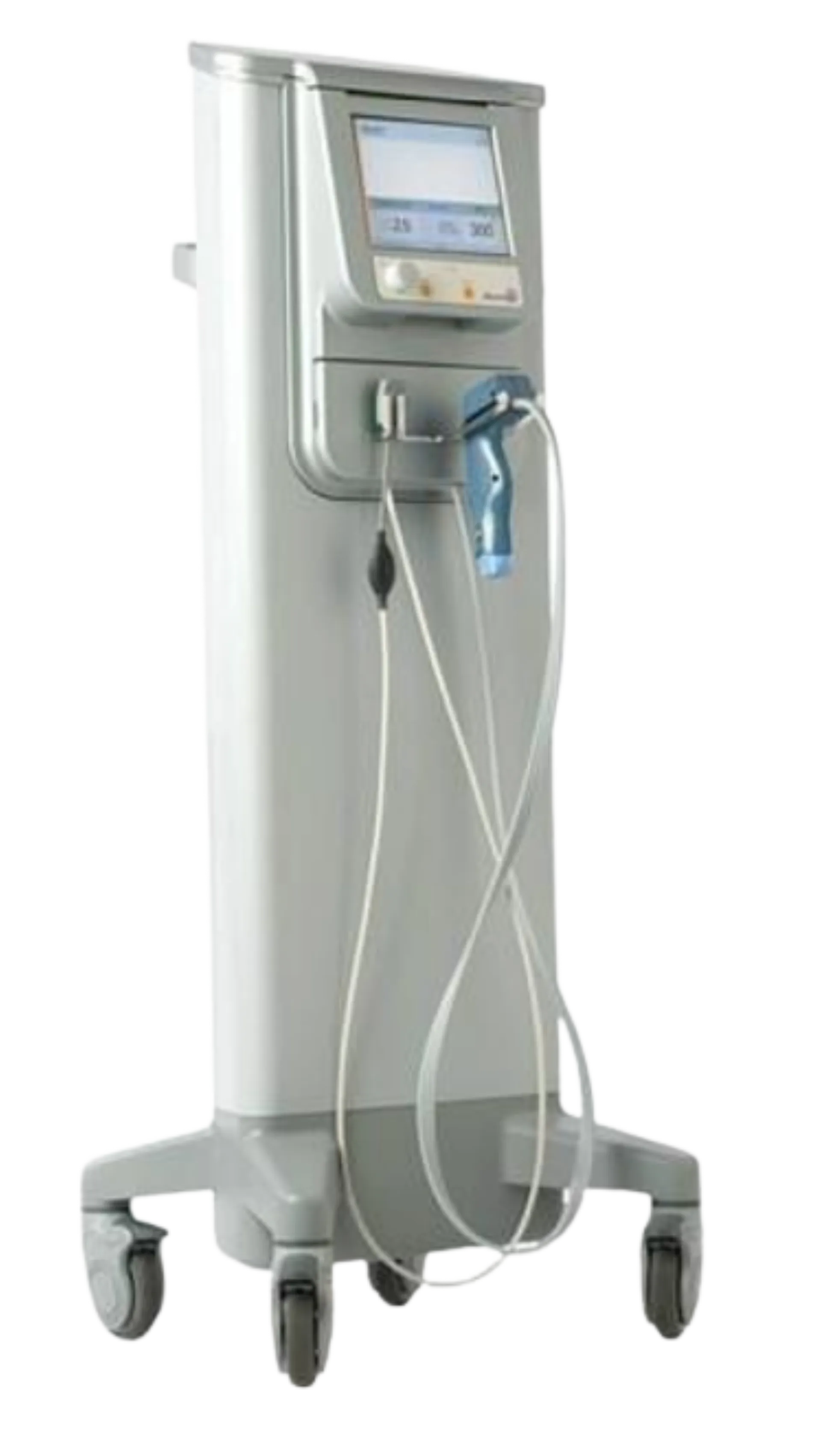
Pre-Treatment Consultation and Preparation
Every Thermage Flx session begins with a consultation where the practitioner evaluates skin laxity, identifies target areas, and determines the appropriate shot count. A standard full-face protocol uses 600 shots, though the jawline-only protocol requires 300-400 shots. The practitioner photographs baseline conditions from 5 standardized angles for post-treatment comparison. Skin is cleansed thoroughly, and a temporary treatment grid is marked on the face to ensure systematic energy coverage across all targeted zones.
No topical numbing cream or injectable anesthesia is required for Thermage Flx. The device's built-in vibrating handpiece and cryogen cooling spray manage comfort throughout the session. Patients with metal implants near the treatment area, active skin infections, or pacemakers are screened during consultation to confirm candidacy.
How AccuREP Technology Delivers Each Pulse
AccuREP stands for Accutune Repetitive Energy Pulsing, the proprietary system that differentiates Thermage Flx from earlier radiofrequency devices. Before each of the 600 shots, AccuREP measures tissue impedance in real time and adjusts energy output to match the specific resistance of the tissue beneath the tip. This automated calibration takes 0.1 seconds per pulse and ensures uniform heating at 65-75C regardless of variations in skin thickness, hydration, or fat content across different facial zones.
The treatment tip covers a 3.0cm2 surface area, delivering bulk heating to the dermis and subcutaneous tissue at depths of 1-2cm. Simultaneously, a cryogen spray cools the epidermis to 4-10C before, during, and after each pulse. This cooling sandwich effect protects the skin surface while concentrating thermal energy precisely where collagen fibers reside. The entire cycle from impedance measurement to cooling completion takes approximately 4-6 seconds per shot.
Step-by-Step Procedure Walkthrough
Phase 1: Grid Mapping and Calibration (5-10 Minutes)
The practitioner applies a disposable coupling membrane to the treatment tip and stamps a temporary grid pattern across the face. This grid divides the treatment area into systematic zones ensuring no area receives overlapping pulses or missed coverage. The device performs 2-3 calibration shots on the jawline to establish baseline impedance readings and confirm the patient's comfort level with the selected energy setting.
Phase 2: Active Treatment (35-45 Minutes)
The practitioner works methodically through the grid, delivering pulses in sequential passes. Each shot deposits radiofrequency energy for 4-6 seconds while the vibrating handpiece activates to mask thermal sensation. Patients describe the feeling as a brief deep warming followed by immediate cooling. The forehead and temple areas typically receive 100-150 shots, the midface and cheeks 200-250 shots, and the jawline and submental region 200-250 shots. Energy levels range from 3.0 to 5.5 joules per pulse depending on tissue thickness in each zone.
Phase 3: Completion and Immediate Assessment (5 Minutes)
After the final pulse, the practitioner removes grid markings with a gentle cleanser and evaluates the treatment area for uniform erythema, which confirms adequate energy delivery. Mild redness is expected and indicates successful collagen heating. Patients receive sunscreen application and aftercare instructions. The entire visit from arrival to departure takes 60-90 minutes, including consultation and preparation time.
The Science Behind Collagen Remodeling
Thermage Flx produces two distinct biological responses. The immediate effect is collagen contraction, where existing collagen fibers shorten by 15-25% when heated to 65-75C. This produces a subtle tightening visible on the same day. The delayed response involves neocollagenesis, the formation of new type I and type III collagen fibers triggered by the controlled thermal injury. This remodeling phase begins at week 2 and continues for 3-6 months, producing progressive lifting and firming that peaks around month 4. Zelickson et al. Archives of Facial Plastic Surgery. 2004;6(6):370-373. doi:10.1001/archfaci.6.6.370
Comfort Measures During Thermage Flx
Three integrated comfort systems work during every pulse: cryogen cooling drops surface temperature to 4-10C, the vibrating handpiece activates sensory distraction through gate control mechanism, and AccuREP prevents energy spikes by calibrating each shot individually. Patients rate average discomfort at 3-4 on a 10-point scale. The practitioner can adjust energy levels between shots based on patient feedback, lowering intensity in sensitive areas like the periorbital region while maintaining higher settings on the jawline and cheeks where tissue is thicker. At RE:BERRY Gangnam, Aesthetic Medicine Specialist Yoon-Gon Ryu tailors energy protocols based on each patient's skin thickness mapping performed during the initial consultation.